
OUR PEOPLE
Board Members
The Board oversees the organisation’s strategic direction, governance, risks, and performance. Board members provide advice, direction and support to the Executive Director to deliver on the mission and the strategic plan.
Four Member representatives with voting rights are elected from our member organisations, and include two government member organisation representatives and two non-government member organisation representatives. Other Board members with voting rights include the Independent Indigenous Member, the IUCN Councillor residing in Australia and our Treasurer. The Board appoints non-voting ex-officio Board members (or office bearers) including a Public Officer and IUCN Commissions Officer.

Barry Hunter
Co-Chair | NGO Member
CEO
North Australian Indigenous Land and Sea Management Alliance (NAILSMA)

Barry Hunter is the CEO of the North Australian Indigenous Land and Sea Management Alliance (NAILSMA) – leading Indigenous-led programs in ranger development, biodiversity conservation, and systems change.
Barry is a descendant of the Djabugay speaking people of the Cairns hinterland and grew up beside the Barron River in the rainforest near Kuranda. His career spans government conservation agencies, the mining and exploration industry, community organisations, and Indigenous-led NGOs. More recently, he has worked as a consultant in Aboriginal land management, the carbon industry, and community economic development. This diverse experience has given him a deep understanding of the intersections between conservation, cultural heritage, and sustainable economies.
His governance and leadership experience includes being Chairperson of Terrain NRM – providing strategic oversight for one of Australia’s leading natural resource management organisations. Barry is also the former Chair of the Aboriginal Carbon Foundation – guiding governance and partnerships that connect Indigenous communities with ethical carbon market opportunities. He also served as Acting CEO of the Djabugay Aboriginal Corporations – strengthening governance and cultural heritage management at the community level. Barry's professional contributions include lead authorship of the Indigenous Lands chapter of the State of the Environment Report 2021; facilitating Healthy Country Planning and Free, Prior and Informed Consent (FPIC) agreements with conservation and carbon market partners; developing fire management plans and cultural heritage assessments with Indigenous ranger groups; being the architect of protocols for ethical engagement between researchers and Traditional Owners; and contributing to Sea Country planning and the Barron Gorge National Park Bama Plan, embedding Indigenous knowledge into conservation frameworks.

Erica McCreedy
IUCN Regional Councillor
Chief Operating Officer
North Australian Indigenous Land and Sea Management Alliance (NAILSMA)
Erica McCreedy is NAILSMA's Chief Operating Officer, tasked with overseeing the day to day administration and operational functions of the organisation, including working closely with the management team to deliver NAILSMA's 10 year Strategic Plan. Erica is a Māori woman from Ngāti Raukawa and Te Aitanga-a-Hauiti tribes from Aotearoa, New Zealand. Erica is a communications and strategy specialist, with 15 years experience working with Indigenous land and sea managers across Australia, and internationally.
Erica takes a community-led project management approach. She recently led the development of NAILSMA's monitoring and evaluation framework to track how NAILSMA creates positive and sustainable impacts with Indigenous communities and partners, now and into the future. She has extensive experience facilitating and delivering on-ground training workshops and technical support to Indigenous rangers and communities with a particular focus on culturally led education, training, and communications.
Erica joined NAILSMA in 2011 as an I-Tracker Project Officer, leading the development of the land patrol application to support Indigenous land managers to collect information about their country and their land management efforts. She has developed monitoring and evaluation systems, business on country plans and education and training programs during her time at NAILSMA. She has also founded a successful consulting business and business mentoring company supporting women of culture to create and grow culturally aligned businesses. She completed a Postgraduate Diploma in Indigenous Knowledge Systems at Charles Darwin University and holds a Bachelor of Arts in Indigenous Studies and Media Communications from Southern Cross University.

Dr Rosie Cooney
GOV Member
Senior Director, Office of Nature Conservation
ACT Government Environment Directorate
Rosie Cooney leads the Office of Nature Conservation in the ACT Government, leading nature conservation science, policy, and strategic conservation programs, working closely with land managers, Traditional Custodians, cross-jurisdictional colleagues, community partners, and a network of research collaborators.
Her background is as an ecologist and biodiversity policy specialist, with extensive international and national experience spanning the conservation science/policy interface, and with a focus on pragmatic and equitable conservation approaches that reconcile conservation outcomes with social and livelihood priorities. Rosie has worked for leading international NGOs, including IUCN, WWF International and Fauna & Flora International; in NSW and ACT Government; in academic roles in ANU and UNSW; and also as an independent consultant.
Rosie has been an active IUCN Commission member for over 25 years, including sitting on the Steering Committees for the Species Survival Commission (SSC) and Commission for Environmental, Economic and Social Policy (CEESP). From 2012 until 2019 she led the IUCN Sustainable Use and Livelihoods Specialist (SULi) Group, a diverse and interdisciplinary expert network of over 300 members. In this role, she convened interdisciplinary and cross-sectoral groups and events to generate new thinking on topical conservation issues, led the synthesis of research findings into policy-relevant guidance and briefing papers, and carried out research and analysis to inform policy deliberations.
Other leadership and advisory roles have included Biodiversity Advisor to the Global Environment Facility’s Science and Technical Advisory Panel, membership of the UN Secretary-General’s Science Advisory Board, Deputy Chair of the Convention on Biological Diversity's Collaborative Partnership on Wildlife, and membership of the Advisory Council of the Luc Hoffmann Institute.
Rosie holds a Bachelor of Science (Hons) and LLB (Hons) from ANU, a PhD from Cambridge, and is an Honorary Associate Professor at the Fenner School for Environment and Society, ANU.

Dr Joanne Wilson
Public Officer | Chair, Risk and Audit Committee
Senior Project Officer, Strategy & Policy. NSW EPA
Joanne works in the Aboriginal Initiatives team of the NSW Environmental Protection Authority and comes from a strong background in conservation science, management and policy specialising in marine and coastal ecosystems, protected area management and international partnerships. Joanne has a Bachelor of Science from James Cook University and a PhD from Southern Cross University where she studied reproduction in subtropical corals. Over her 25-year career she has worked in diverse roles across governments, industry and non-government organisations often at the nexus of science, management, policy and community engagement.
She has worked in diverse cultural settings, including five years living and working in Indonesia as Lead Scientist for The Nature Conservancy Indonesia Marine Program. In NSW, she works with Aboriginal people and communities to bring cultural values and perspectives to environmental protection. Joanne is a member of the WCPA and is involved in the IUCN Green List of Protected and Conserved Areas where she is currently a member of the Global Standards Committee.
To strengthen her capacity as a board member, Joanne recently completed modules in governance, finance, and strategy and risk through the Australian Institute of Company Directors.

Philip Prentice
Treasurer
Director, Infrastructure Analysis
ACT Government
Philip is an experienced engineer and business leader with a passion for improving organisations’ environmental and financial performance.
Philip works with the ACT Government as a Director, Infrastructure Analysis, and has previously held senior management roles in government, run his own business, and worked for several for-profit and not-for-profit organisations.
His broad experience across sectors provides a unique perspective to solve challenges. Philip is a strong advocate for environmental sustainability, and also serves as the Treasurer of Landcare ACT.

Dr Jody Gunn
Co-Chair | NGO Member
CEO
Australian Land Conservation Alliance (ALCA)
Jody Gunn is a conservation scientist committed to the conservation of land, water and culture, with executive level management experience spanning over two decades.
Currently serving as the CEO for the Australian Land Conservation Alliance, Jody is known for fostering partnerships that unite across sectors and cultures in shared stewardship of Australia's unique landscapes.
Jody has held senior roles in international, national and regional organisations, including government, non government, and research sectors, and has contributed to key policy reforms, funding initiatives, and community-driven programs.
Her leadership is underpinned by a strong science background, values-driven decision-making and a collaborative ethos.
While an ecologist in training, her career has always drawn her to work at the intersection of people and nature. From supporting young people through the Jane Goodall Institute’s Roots and Shoots Program in Tanzania to take action for the environment, undertaking research to improve livelihoods of rural communities living with human-wildlife conflict, and more locally, facilitating and developing joint management plans for the Northern Territory central parks estate with the Parks Service and Traditional Owners, to now, being at the cutting edge of private land conservation – which centres on how people engage with, manage and protect our natural environment, from large conservation organisations, First Nations communities to individual landholders.
Jody continues to influence Australia's conservation future by building capacity, advancing nature and climate solutions and bringing people together around a shared nature agenda.

Graham Moore
Indigenous Member
Senior Cultural Scientist
NSW Department of Climate Change, Energy, the Environment and Water
Graham Moore is a Gurrungutti-munji Djuwin man with over 35 years of experience in the natural resources sector. He has dedicated his work to instilling Indigenous values within both Aboriginal and non-Aboriginal people in New South Wales. His efforts have focused on educating others about understanding Country from a Cultural lens, seeing things like bush tucker, bush medicine, the care of species through Kinship and ultimately how Aboriginal people utilise place in harmony. Graham is always weaving connections between Western Science and Traditional Ecological Knowledge to enrich both knowledge systems for Caring for Country. He is also an esteemed provider of cultural capabilities training, which focuses on relationship, trust and education.
Graham is the creator of the Aboriginal Land Management program and established the positions of Indigenous Natural Resource Officers in New South Wales. Notably, he was the first Australian Indigenous person in the world to enter the field of Global Environmental Land Management at Adelaide University. Graham’s current role is Senior Cultural Scientist, and he has contributed to changes such as “Weaving Traditional Ecological Knowledge into Threatened Species Conservation Assessments in NSW”, a Guide for Conservation Assessments Officers
Graham is a sought-after professional and knowledge holder who has extensive experience serving on various boards, where he has contributed to high-level governance, budgetary oversight, and strategic direction planning. His focus is for achieving goals for Aboriginal initiatives and ensuring a Cultural Monitoring Evaluation and Review (CMER) of project operations to enable the principles of adaptive management
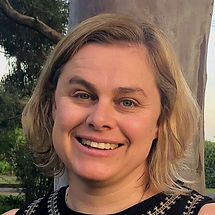
Dr Kelly de Bie
GOV Member
Manager, Management Effectiveness
Parks Victoria
Kelly de Bie is a passionate conservation scientist with twenty years of experience working across academia, government, and consultancy.
Since obtaining her PhD in 2008, her career has been driven by a commitment to strengthening the role of protected areas as the cornerstone of biodiversity conservation.
Her work focuses on building the evidence base for effective management, through monitoring, evaluation, and applying structured decision-making frameworks. Across all roles in her career, she has championed the integration of robust science, transparent evaluation, and shared learning to improve conservation outcomes.
Her expertise lies in monitoring, evaluation, and evidence-based decision-making for protected and conservation areas and natural resource management.
She has led and contributed to major programs that assess and improve management effectiveness, translate data into strategic direction, recognise and measure social, cultural and ecological values to inform decision making, and support organisations to adaptively manage complex landscapes.
This work has reinforced her belief that conservation outcomes improve when decisions are grounded in robust evidence, transparent frameworks, and genuine collaboration between practitioners, researchers, Traditional Owners, and community partners.
Kelly currently leads Parks Victoria’s management effectiveness program, where she works across the organisation to evaluate management performance, guide operational and management planning, and strengthen the organisation’s capability to deliver conservation outcomes.
This role has given her significant experience navigating governance systems, aligning diverse stakeholders, and embedding continuous improvement in a large, complex organisation.

Jo Hopkins
Chair, Commissions
Committee
Victorian Campaigns Manager
The Wilderness Society
Jo Hopkins is currently the Victorian Campaigns Manager for The Wilderness Society, with a focus on conserving and enhancing the tall forests of Eastern Victoria. She is also the Co-Chair of the Health & Wellbeing Specialist Group for the IUCN World Commission on Protected Areas and has extensive experience in protected area management.
Jo spent over 25 years at Victoria's national park service, Parks Victoria, working both in operations and corporate roles, leading the national, international and partnerships programs for over 10 years. As a result of this work, Jo has a strong network of industry contacts at local, national and international levels.
Jo has a combination of substantial professional experience with a deep commitment to the vital role that parks and protected areas play in ensuring a healthy natural world. With experience in establishing two start-up not-for-profit organisations, Jo has a proven track record in ensuring good governance, developing policy, and proactive communications with a membership base.
As a keen swimmer in any type of water, Jo enjoys spending time in the many spectacular coastal parks, rivers and wetlands that Australia offers.
Executive Director

Sarah Terkes
Executive Director
Sarah Terkes has been the Executive Director of the IUCN Australian Committee since April 2024. Sarah is an experienced Not-for-Profit executive leader and Board Director with over 25 years of combined expertise in nature conservation, restoration, world heritage, operations, finance, governance, events, marketing, and communications.
Sarah has worked in Academia and the Environmental NGO sectors for the last 18 years, including 10 years at UNSW. She has enjoyed a rich history of collaborating with partners and colleagues in Australia and overseas to produce positive outcomes in research, education, conservation, and restoration.
Sarah works from the Country of the Gundungurra people in the Blue Mountains, NSW.